


Super User
Etiam malesuada velit bibeum donec sit amet orci augue sed tristique amet risus. Mollis malesuada. Quis quis nulla. Vestibulum ante ipsum primis in faucibus orci luctus et ultrices posuere cubilia.
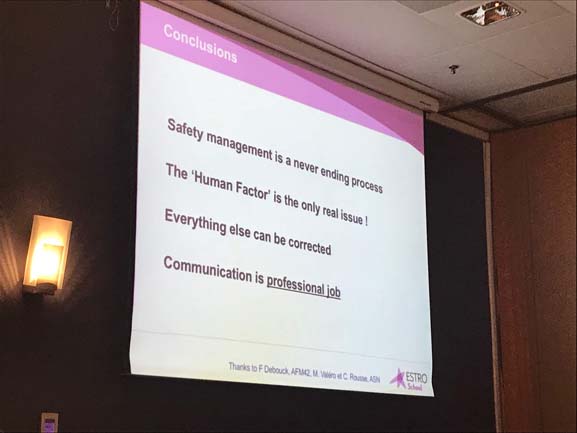
LEARNING OUTCOMES
- Understand the cause and frequency of incidents-accidents in a radiotherapy department
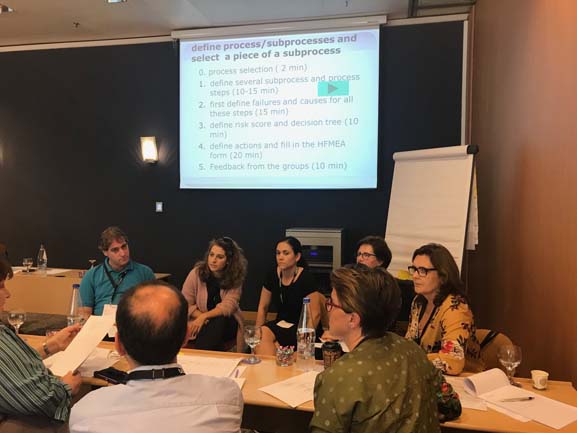
- Understand the principles of reactive management to incidents (registration, analysis and feed back to the Quality Management System) and of pro-active management of safety (incident prevention)
- Know how to communicate around radiotherapy incidents, with the patient and his/her relatives, within the department itself and with the media.



A freshly published IDoR book on cardiac imaging including EFOMP perspective (chapter 22) written by Dr Touko Kaasalainen and the chair of EFOMP Scientific committee Dr Mika Kortesniemi is available for downloading.
A summary report on DOSIMETRY AUDITS IN RADIOTHERAPY has been published by the Greek Atomic Energy Commission on October 2018
The primary objective of the dosimetry audit (DA) is to evaluate the dosimetric quality, planned dose accuracy, treatment complexity and treatment deliverability of radiation therapy procedures aiming to consult on the detected discrepancies for the improvement of standards and reliability of the RT centers.
The scope of this report is to:
- present the current infrastructure and human resources of the radiotherapy centers countrywide,
- provide key methodology for the dosimetry audits,
- present and assess the results of the dosimetry audits conducted countrywide over the last 15 years,
- outline the quality of patient dosimetry as recorded and evaluated at a national level,
- to highlight the most important lessons learned that were arisen from the dosimetry audits,
- demonstrate the contribution and the added value of the dosimetry audits to the improvement of patients’ radiotherapy dosimetry accuracy, and
- disseminate the relevant actions and experience of EEAE to stakeholders.
https://eeae.gr/files/anakoinoseis/reports/Dosimetry_Audit_Report.pdf
The main feature of this Autumn 2018 issue is the series of articles related to the second European Congress of Medical Physics (2nd ECMP), held in Copenhagen on last August, and related events. You will find a number of articles describing how this highly successful Congress (both in terms of attendance and scientific/technical level) represented a fundamental step in the progress of our European Federation.
But we cannot underestimate the relevance of two facts which occurred in the last months and reported with two articles on pages 4 -7 of this issue: the new possibilities of EFOMP National Member Organisations to become Associated Societies with our scientific journal: Physica Medica - European Journal of Medical Physics (see article on pages 4-5 by the EFOMP President), and the increased interest of Companies in becoming official EFOMP Company Members (see article on pages 6-7).
For 2019, important activities/events in which EFOMP is involved are illustrated in this issue, with articles on ECR 2019 (27th February- 3rd March, Vienna, Austria) and the forecoming ESMPE Schools.
Workforce and training issues in UK are illustrated in three articles by Prof. B. Ferry, Dr. L. Parvin and our editor M. McJury, respectively, providing a clear view of the status in these aspects of medical physics in UK.
A highlight of this issue is the announcement that Italy will host the 3rd ECMP in Turin on 24-26 September 2020. Please save the date!
I admit that I was delighted by the proposal, by our editor C. Caruana, to start a section of EMP News dedicated to “What Medical Physicists do in their free time!”: you can find in this issue the first two articles of this interesting series.
We are sure you will most enjoy reading the article by Prof. P. Sharp, Past EFOMP President, on “Is there life after the Presidency?”. We are grateful to Prof. Sharp for sharing his feelings on this otherwise delicate issue, which points to the passion and full participation which characterizes the activity of all colleagues involved in high level responsibilities for the benefit of our profession and of our European community of medical physicists.
Mark McJury contributes also his review of the recent publication in medical physics (“Clinical 3D Dosimetry in Modern Radiation Therapy”), the second articles in this series, started this year.
The Editorial Board of EMP News thanks all articles’ contributors to this nice Autumn issue!
Please subscribe for your free copy of EMP News, at
Subscribe to EFOMP announcements
Paolo Russo & Your editorial team (This email address is being protected from spambots. You need JavaScript enabled to view it.).
European Medical Physics News, October 2018